The Truth About Bee Intelligence
It’s a question many people have wondered at some point—especially after a close encounter with a buzzing bee: Do bees recognize humans? Are we just large, moving objects to them, or do they actually remember us in some way?
While bees don’t recognize humans in the same way we recognize each other, the science behind their perception and memory reveals something far more interesting. Bees are capable of learning, remembering, and even distinguishing between different visual patterns—including faces under certain conditions.
Understanding how bees perceive humans opens the door to a deeper appreciation of their intelligence and behavior. It also helps explain why some interactions with bees feel calm and predictable, while others can quickly turn defensive.
How Bees See the World
To understand whether bees recognize humans, we first need to understand how they see.
Bees don’t view the world the same way we do. Their vision is adapted for survival, particularly for finding flowers and navigating their environment.
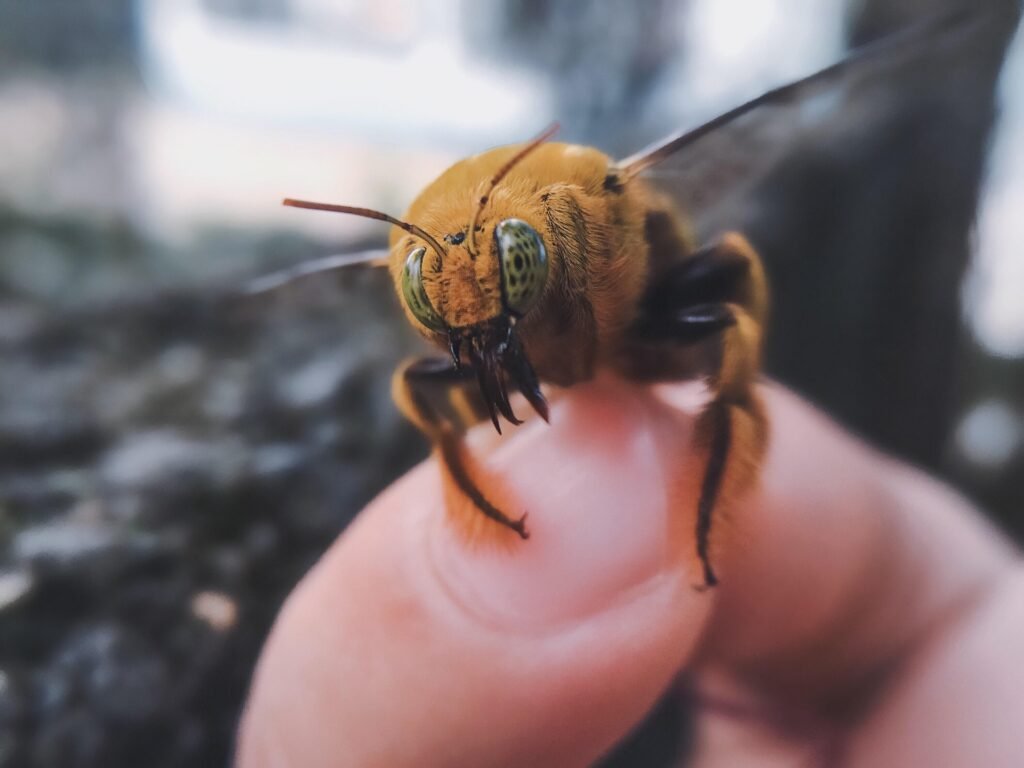
They see a range of colors that includes ultraviolet (UV) light, which humans cannot detect. Many flowers have UV patterns that act like landing guides for bees, directing them toward nectar.
However, bees have relatively low visual resolution compared to humans. This means they don’t see fine details clearly. Instead, they rely on contrasts, shapes, and movement.
When a bee looks at a human, it doesn’t see facial features the way we do. It sees a large shape, movement patterns, and possibly color contrasts.
Can Bees Recognize Faces?
Surprisingly, research has shown that bees can learn to recognize human faces—at least in a basic way.
In controlled experiments, scientists trained bees to associate specific human face images with a sugar reward. Over time, the bees learned to distinguish between different faces and consistently chose the correct one.
However, there’s an important caveat: bees don’t recognize faces the way humans do. Instead, they are using pattern recognition.
They break down a face into simple visual elements—lines, shapes, and contrasts—and remember those patterns. This is similar to how they recognize flowers.
So, while bees can be trained to recognize faces, it doesn’t mean they naturally identify individual humans in everyday situations.
Do Bees Remember Individual Humans?
In natural environments, bees are unlikely to remember individual humans in a meaningful way.
They don’t form social bonds with humans, and their survival doesn’t depend on distinguishing between different people. Instead, their memory is focused on what matters most:
- Food sources
- Navigation routes
- Hive location
- Environmental cues
That said, bees can remember experiences associated with humans.
If a bee repeatedly encounters a calm, non-threatening human presence, it may become less reactive over time. On the other hand, if it associates humans with danger—such as swatting or disturbing the hive—it may respond defensively.
In this sense, bees don’t recognize you, but they may remember what humans like you represent.
The Role of Scent and Chemical Signals
Vision isn’t the only way bees interpret the world. In fact, scent plays an even more important role.
Bees rely heavily on chemical signals, both from flowers and from each other. They can detect subtle changes in scent that humans would never notice.
Humans also produce scents through skin, sweat, and even products like perfumes or lotions. While bees don’t identify individuals by scent, certain smells can attract or repel them.
For example, floral or sweet scents may draw a bee closer, while strong or unfamiliar odors could trigger caution.
More importantly, bees release alarm pheromones when they feel threatened. If one bee becomes agitated near a human, others may follow suit—even if the human hasn’t done anything wrong.
Why Some Bees Seem “Friendly”
Many people report experiences where bees appear calm, curious, or even “friendly.” While it might feel personal, it’s more about behavior patterns than recognition.
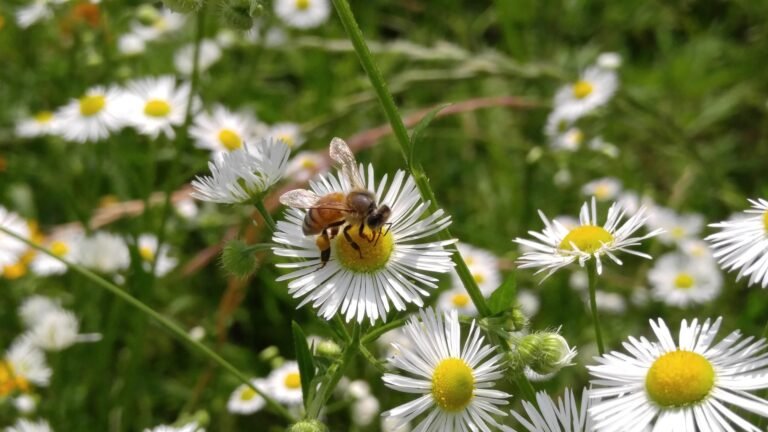
Bees are generally not aggressive unless they feel threatened. When they are foraging, their primary focus is collecting nectar and pollen—not interacting with humans.
If you remain still and avoid sudden movements, a bee is more likely to ignore you or calmly investigate before moving on.
This can create the impression that the bee recognizes you as safe. In reality, it’s simply not detecting any threat.
Why Bees Sometimes Act Aggressively
On the flip side, bees can become defensive under certain conditions.
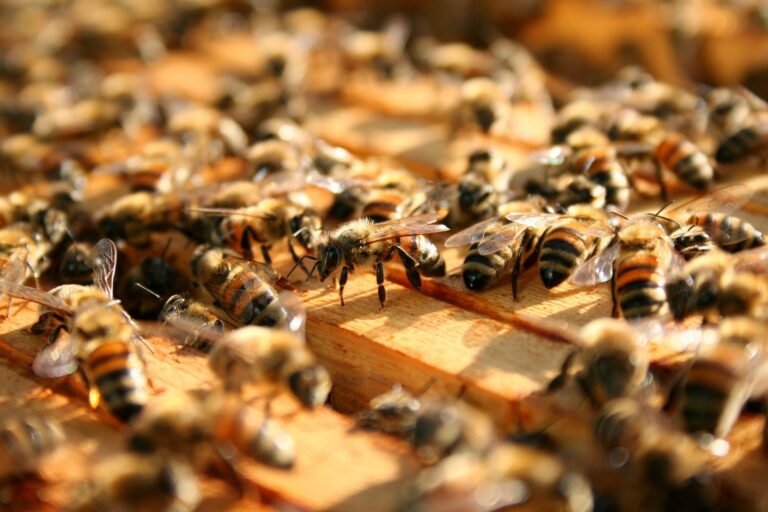
This is especially true near a hive, where guard bees are responsible for protecting the colony. In these situations, bees are highly sensitive to movement, vibration, and scent.
Dark clothing, rapid movements, and strong odors can all increase the likelihood of a defensive response.
Again, this isn’t about recognizing a specific person—it’s about interpreting signals that suggest danger.
Comparing Bees to Other Insects
When it comes to recognizing humans, bees are actually more advanced than many other insects.
For example, mosquitoes rely almost entirely on scent and heat detection. Ants depend heavily on pheromone trails. Bees, however, combine visual learning, memory, and scent detection in a more complex way.
This combination allows them to adapt to changing environments and learn from experience—traits that are essential for survival.
What This Means for Human-Bee Interactions
Understanding how bees perceive humans can help us interact with them more safely and respectfully.
If you want to avoid negative encounters, the key is to minimize anything that might be interpreted as a threat.
Move slowly, avoid swatting, and be mindful of scents. If a bee approaches you, it’s usually just investigating—not attacking.
Creating bee-friendly spaces with flowers and natural habitats can also encourage positive interactions. When bees are focused on abundant food sources, they are far less likely to engage with humans at all.
Final Thoughts
So, do bees recognize humans?
Not in the way we recognize each other. Bees don’t have the cognitive framework to identify individual people as unique beings. However, they are capable of learning, remembering patterns, and associating experiences with certain stimuli.
They may not remember you, but they can remember what you represent—safe, neutral, or threatening.
The science behind bee intelligence shows us that even the smallest creatures have complex ways of understanding their world. By respecting those systems, we can coexist more peacefully with these essential pollinators.